
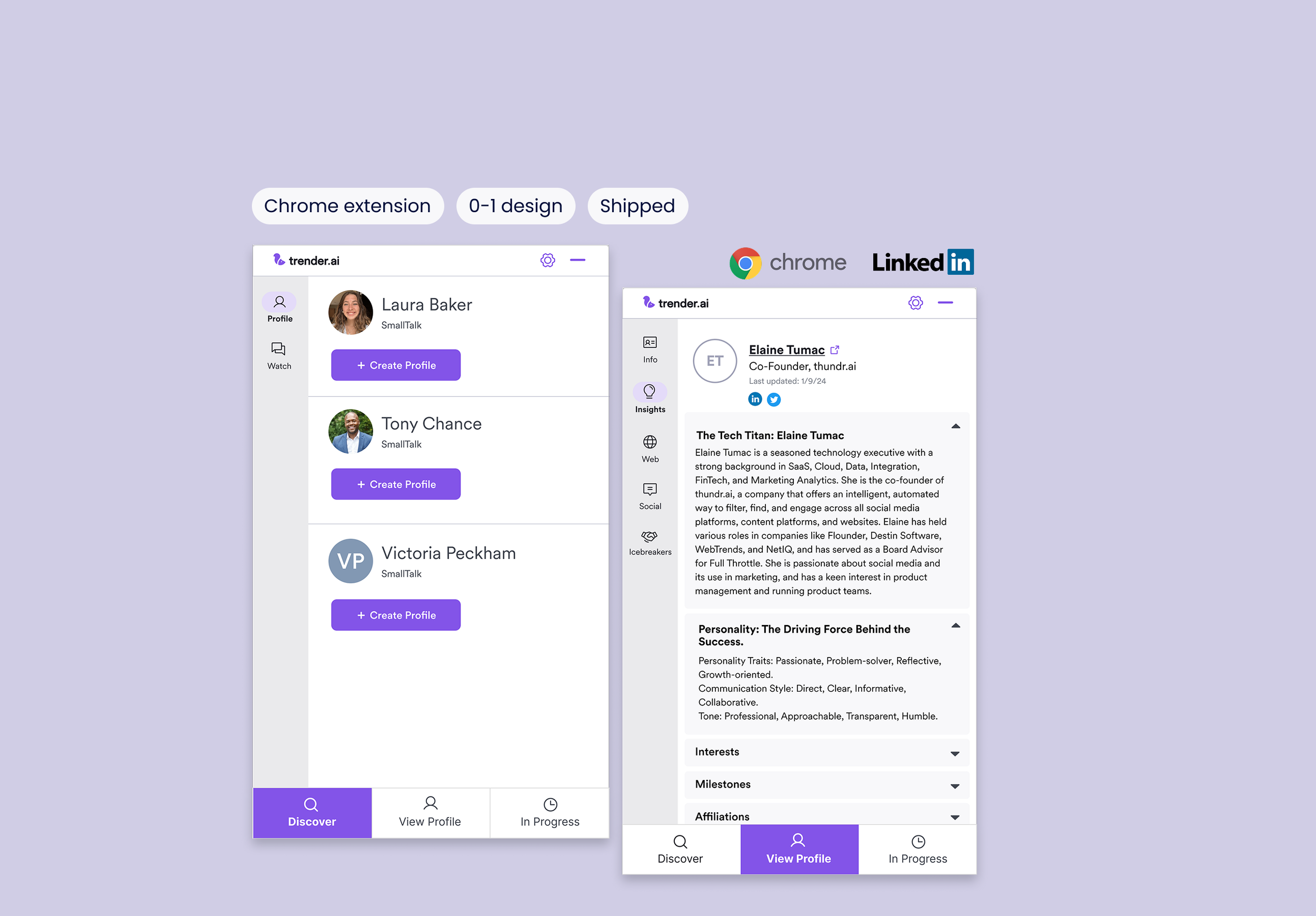
Prospect research built into the sales workflow
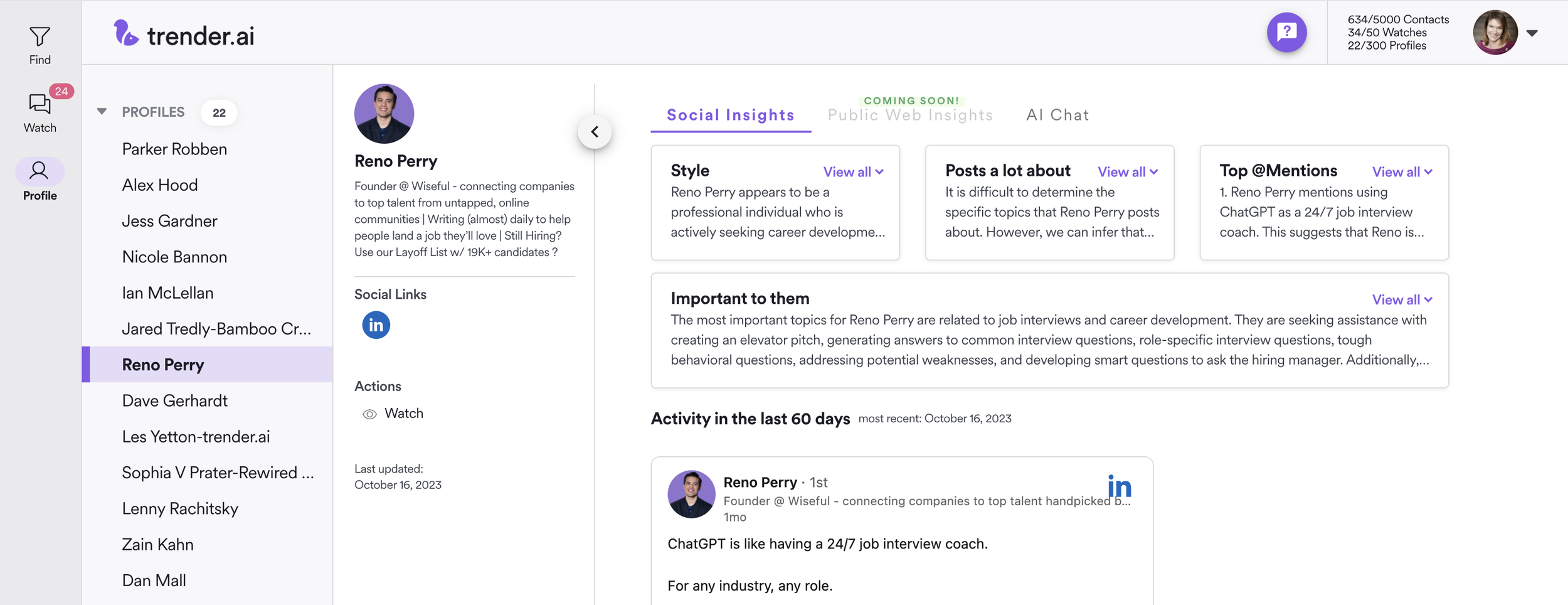
TL;dr Prospect research can take hours per lead. I designed a one-click trender.ai Chrome extension for LinkedIn that saved up to 15 hours a week for 3,000 users.
Context
Background
trender.ai used AI algorithms to find public web/social posts written by, or @mentioning, a person, company, or topic, then turned them into insights a sales rep can act on.
Users: Sales reps, Business dev reps, Marketing Managers, and small business owners. Some technical, mostly light technical knowledge.
Business Goal
Shorten time-to-value, improve retention, and gain market traction.
Duration: Spring 2022 – Fall 2023
(V1 extension released Fall 2023)
Impact: 2+ hours saved per prospect, up to 15 hours a week for ~3,000 users
My role: End-end Product Designer
My Team: UX Research by VP of Product, 1 FE Engineer, 2 BE Engineers, 1 ML Engineer
THE SHIPPED FEATURE
Hover a name. Get a prospect dossier.
Sales reps spent their day in LinkedIn, so trender met them there. Hovering over a person or company pulled them into the extension. One click sent them into trender, where AI automatically built a dossier of insights, with no manual entry or tab switching.
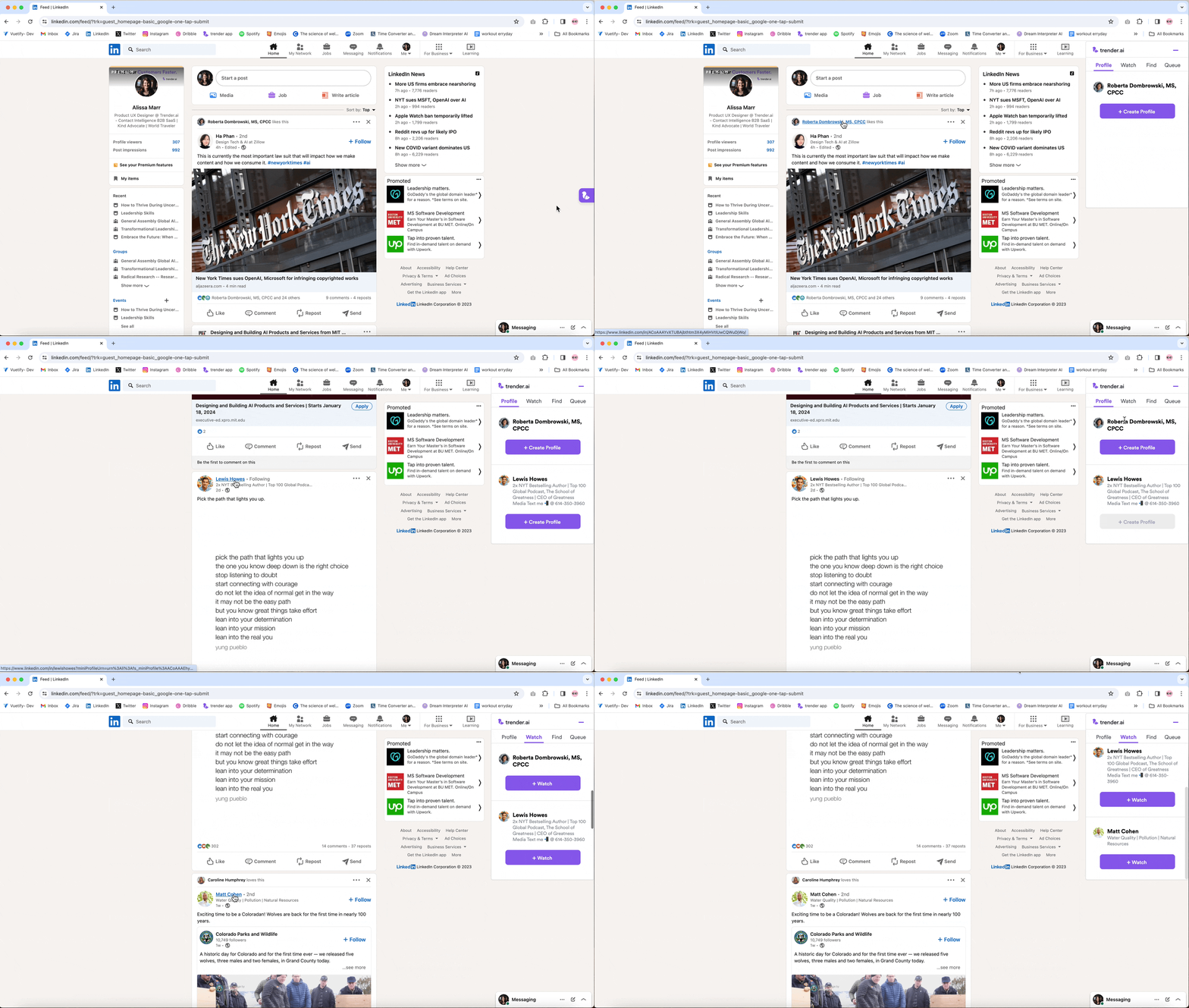
Hover over a name in LinkedIn or Sales Navigator, even in the comments, and add the prospect to trender in one click.
THE PRODUCT
AI-powered prospect research for B2B sales teams
trender.ai gathers public web and social posts written by, or mentioning, a person or company, then turns them into insights sales reps can use to start conversations.
Business goal: shorten time-to-value, improve retention, and gain market traction.

THE Problem
Starting a search should have been simple. Instead, it was the hardest part of the product.
When I joined, every search began with a long setup form. A UX audit found three issues:
Unfamiliar terminology that didn’t match how sales reps talk
Little direction on what to enter
Too many fields before seeing any value
👥 Many users abandoned the form, which led to low conversion.
Hick’s Law: increased number of choices increases decision time.
So we set out to redesign how searches start.
The original MVP search form, before the redesign.
Google for social media?
Iteration 1: Search Bar
We hypothesized the familiarity of a search bar would help a user’s mental model.
I came up with the below design by examining at how other apps initialize searches or personalize results depending on a user’s preferences.
Search Bar: Facebook, Instagram, Google.
Step-by-step Surveys: Reddit, Dating Apps, workout apps.

👎 Result > Users entered names or keywords which were not closely related..
Our AI model returned poor quality social posts. Users imagined a feed of super high quality posts, but since our AI algorithm was confused, they got watered down results.
Search bar design with CSV import and Search setup wizards
👥 What users thought
The design looked like a search bar, so users understood its use. But unfortunately it put too much trust on the user.
Usability testing showed not many users understood it was a “boolean-like” search bar.
As a Placeholder solution, we added an onboarding video to explain search strategy. This increased usability by 10% and bought us time for another cycle of research and design iterations.
Getting more specific
Iteration 2: Company or Contact Specific
Very specific fields with ONLY the company or contact name made trender an obvious tool for sales prospecting.

👋 Result > Streamlined prospecting simplified choices!
But users claimed it is too much work to manually add all this information. (and we agreed.)
Step 1: Search for company or person
Step 2: Fill out Contact details
👥 What users thought
Chatting with users revealed the setup time was too steep.
Users understood but the experience was still bad.
⚠️ Mistakes were made
To be transparent, I’ll share some design duds.
While some of these are bad looking back, we sincerely thought this is what users wanted. Users asked for CSV but rarely used it. Advanced search boolean was also widely asked for.
Something you come to realize as you are on the cusp of innovation, users don’t know what they want.

Searches created from a CSV file. 👎

Guardrails: helping users strengthen their results quality
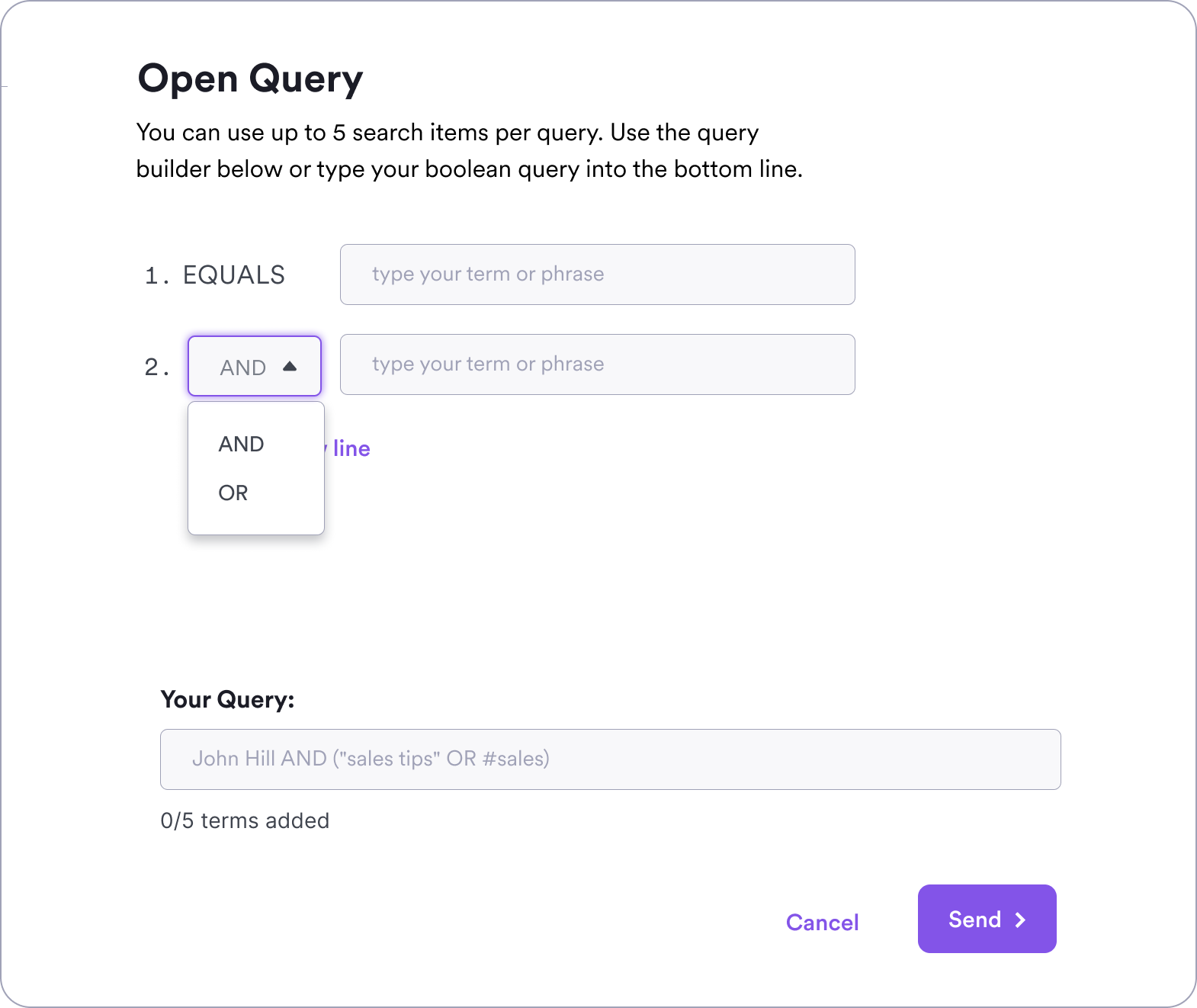
Boolean Search
—Crucial career learning: After months of iterations I found out were were missing something big.
We were NOT aligned with the industry standard in innovations.
Must-Have Google Chrome Extension
A small software program which adds functionality to the browser.
Integration
Sends data with few clicks
THIS was the standard integration. AND this became our route to quality searches. 🎉

make it instant
Iteration 3: Enter the Chrome Extension
Manual entry? Nope! We took inspiration from Apollo.io and designed our own Google Chrome Extension! This now works inside LinkedIn and LinkedIn Sales Navigator, (future is Hubspot).

Our Google Chrome extension puts minimal effort on users. Roll-over names and click to place 20+ companies or contacts into the trender.ai queue within minutes!
🙌 Result > Streamlined prospecting, woohoo!
trender.ai Chrome Extension - Rollover names, companies, it even works in the comments!
Screen design flows from V1
👥 What users thought
Users were psyched!
B2B Sales teams are in LinkedIn all day. Trender became part of their workflow.
The Chrome Extension made trender.ai competitive against industry leading sales tech SaaS apps.
Wait, there’s more!
As an AI SaaS, we need to communicate algorithmic nature and limits to set realistic user expectations.
We switched to the term “watch” instead of search. A person’s mental model for the term “search” believes they will receive immediate results. Trender processing time varies.
Teach users and set expectations
Several improvements helped users understand “watches” and their limitations.
First-time message about how long it takes to get results.
Processing queue. Users can see that yes, their watches have started.
Clear in-app feedback.
New content Email/Slack alerts.
In Reflection
Utilizing competitive research from industry-leading sales tech companies further along than us, like Apollo, is crucial. In order to innovate I need to always be aware of the current level of innovation in sales tech.
Too many choices leads to bad choices. I learned that users want to know exactly what to type into trender. We originally thought that giving flexibility on what to search for was ideal, but quickly found it was too hard.
It can be tricky to find a balance of over explaining vs not enough feedback when designing an AI app. We now assist users heavily with explanations on what is going when they press send. Full transparency clears frustrations and users won’t think the app is broken 😂.